
Bengali New Year Begins: A Festival of Joy and Renewal
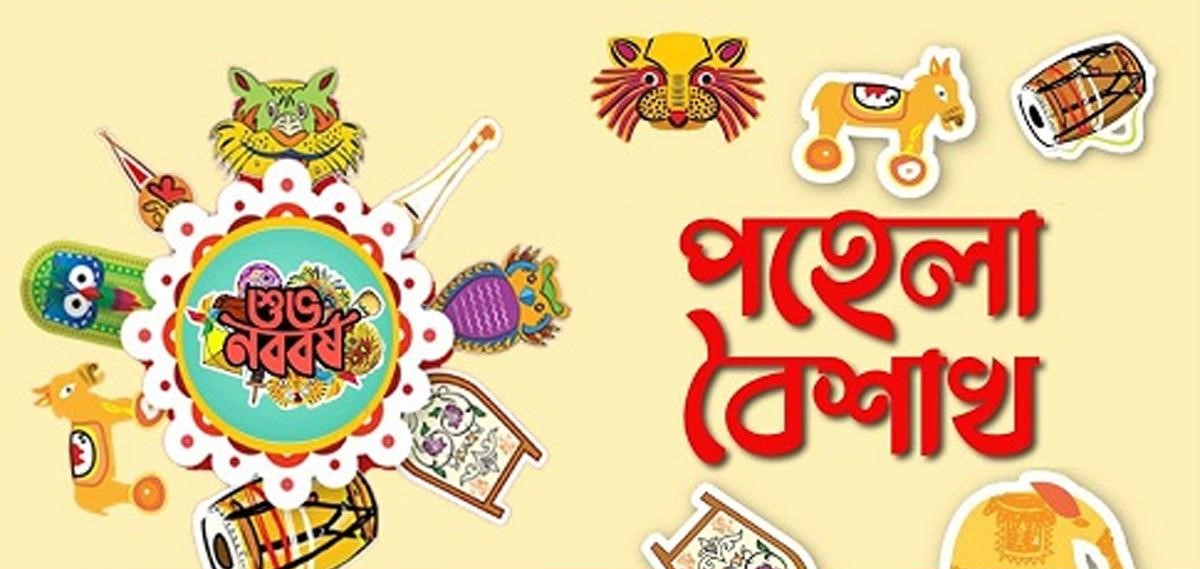
Today is Pohela Boishakh, the first day of the Bengali New Year. The year 1431 has begun in the Bengali calendar. The Bengali New Year, the most vibrant and beloved festival of the Bengali people, is being celebrated across the country with various festivities.
Yesterday was Chaitra Sankranti—the last day of the Bengali year. With a spirit of renewal, Bengalis welcome this day by leaving behind the decay, sorrow, and hardships of the past year. Saying farewell to the old, Pohela Boishakh carries a message of opening the door to new dreams, hopes, and possibilities.
Pohela Boishakh encourages people to rise above communalism and narrow-mindedness, inspiring a more humane and inclusive way of life. It is a proud expression of Bengali identity, culture, and heritage. Through the celebration of the New Year, a renewed sense of unity and cultural pride awakens among the people.
This is a universal folk festival of the Bengali community. The day begins at dawn with joy, songs, processions, and various cultural programs. In the capital and throughout the country, many events have been organized to celebrate the New Year. The day is observed as a public holiday.
On this occasion, Mohammad Shahabuddin and Sheikh Hasina have extended their heartfelt greetings and congratulations to the people of the country and Bengalis around the world in separate messages.
Although the Bengali calendar has a long history, it gained its formal structure during the reign of Emperor Akbar. A new calendar was introduced by combining the Hijri lunar calendar with the Bengali solar system, initially known as the “Fasli San.” This system was developed by the astronomer Fathullah Shirazi under the emperor’s direction, and it later became known as the Bengali calendar or “Bangabda.”
The calendar was introduced mainly for agricultural purposes, so that tax collection could be aligned with the harvest season. Although it originated in 1556, it became effectively operational from 1585.
The Bengali New Year is also closely connected with the cultural and political history of the Bengali people. During the Pakistan era, its celebration became a symbol of Bengali nationalism. In the late 1960s, cultural programs at Ramna Batamul organized by Chhayanaut gained prominence. After independence, it became a symbol of secular values.
In 1989, the “Mangal Shobhajatra” procession was introduced by the Faculty of Fine Arts at the University of Dhaka. In 2016, it was recognized by UNESCO as an Intangible Cultural Heritage of Humanity.
Today, Pohela Boishakh has become one of the largest and most inclusive festivals in Bangladesh—bringing people together in a spirit of joy and unity, regardless of religion, caste, or class.
Editor & Publisher: Dr. Amanur Aman, M. Phil (IUK), PhD (NBU-Darjeeling)
Advisor Editor: Ajoy Maitra
Managing Editor: Shanaz Aman, Executive Editor; Mythos Aman
News & Commercial Offices: T&T Road, Thana Traffic More, Kushtia-7000.
Mobile: 01713914570, E-mail: editor@thekushtiatimes.com
All rights reserved © 2022 thekushtiatimes.com