
Surging transport costs spark fears of instability in Kushtia’s Khajanagar rice market.
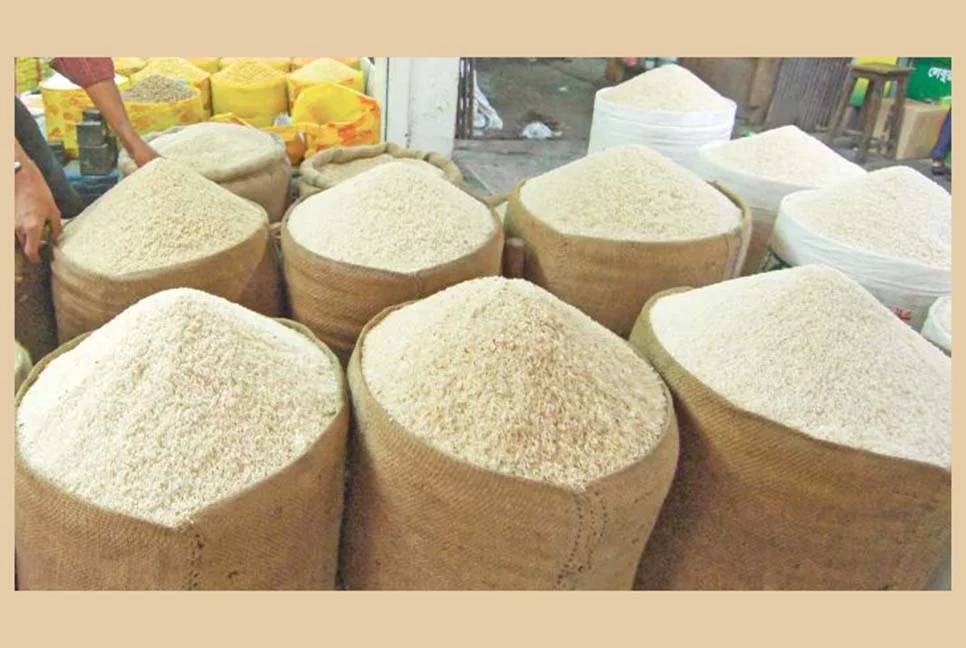
The effect of rising fuel prices is now slowly becoming visible in another key part of the country’s food supply chains—the rice market. In Khajanagar of Kushtia, the country’s second largest rice trading hub, higher transport costs are already creating new pressure on rice production and supply.
According to traders, long-distance truck fares have increased by around Tk. 1500 to Tk. 10,000 in certain cases, which is directly adding to production costs.
A visit to the market on Saturday shows that although the new Boro paddy season has relatively low prices, mill owners and traders are facing extra costs due to rising transport charges. In particular, bringing paddy from northern and northeastern regions to Kushtia mills now costs significantly more than before.
Earlier, transporting paddy by truck from Netrokona to Khajanagar cost about Tk. 22,000–Tk. 23,000, but it has now increased to around Tk. 30,000. As a result, the cost of producing rice per maund has also gone up.
Traders say production costs have increased by around Tk. 34 per maund due to higher transport expenses. Earlier, rice could be produced within Tk. 40 per maund, but now it has risen to Tk. 43 to Tk. 45.
Even with new paddy arriving in Khajanagar, the market is showing caution. Mill owners say that although prices of fine, medium, and coarse rice are currently stable, cost pressure may affect prices in the future.
In the new paddy market, coarse varieties are selling between Tk. 850 and Tk. 1,050. Including transport and milling costs, the price at the mill gate reaches around Tk. 1,100. Old fine paddy is selling at Tk. 1,280 to Tk. 1,300, while medium and coarse varieties are trading between Tk. 1,100 and Tk. 1,200.
Overall, the rice market remains fairly stable. At the mill gate, fine rice sells for around Tk. 70 per kg, medium rice for Tk. 58 to Tk. 60 and coarse rice for Tk. 43 Tk.44.
Mill owners of husking units say rising costs of diesel, electricity and labour are increasing overall production expenses.
Zainal Abedin Prodhan, General Secretary of the Kushtia Rice Mill Owners Association, said transporting one truck of rice to Dhaka now costs around Tk. 1,400 more than earlier and this extra cost is ultimately added to consumer prices.
Millers also fear that when new paddy fully enters the market and electricity costs rise further, rice prices may face additional pressure in the next two to three months.
Abdul Khaleq, Managing Director of Desh Agro Farm Ltd., said they have not increased rice prices yet, but are feeling constant pressure as transport costs for both paddy and rice have increased.
Khajanagar sends roughly 150 to 200 trucks of rice daily to different parts of the country, while paddy also arrives from northern and southern regions. Therefore, any shift in transport costs has a direct impact on the national rice supply system.
The Food Department has already increased monitoring to prevent artificial shortages or excessive stockpiling in the market following fuel price hikes.
Professor Dr. Selim Toha, former Treasurer of Kushtia Islamic University, said that fuel price increases are no longer limited to transport; they are now gradually affecting food markets too. He warned that if they affect essential goods like rice, it will directly reduce consumers’ purchasing power and may create new challenges for overall market stability.
Editor & Publisher: Dr. Amanur Aman, M. Phil (IUK), PhD (NBU-Darjeeling)
Advisor Editor: Ajoy Maitra
Managing Editor: Shanaz Aman, Executive Editor; Mythos Aman
News & Commercial Offices: T&T Road, Thana Traffic More, Kushtia-7000.
Mobile: 01713914570, E-mail: editor@thekushtiatimes.com
All rights reserved © 2022 thekushtiatimes.com