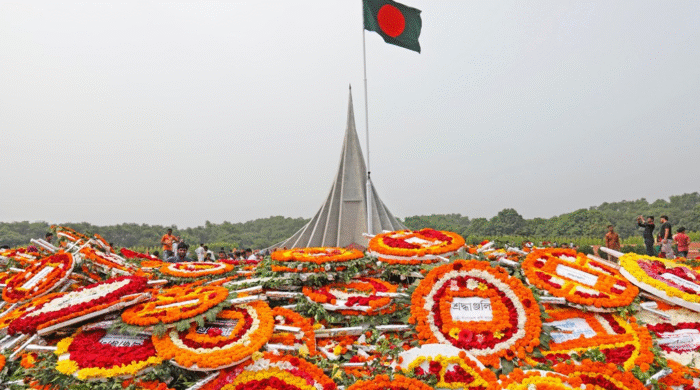


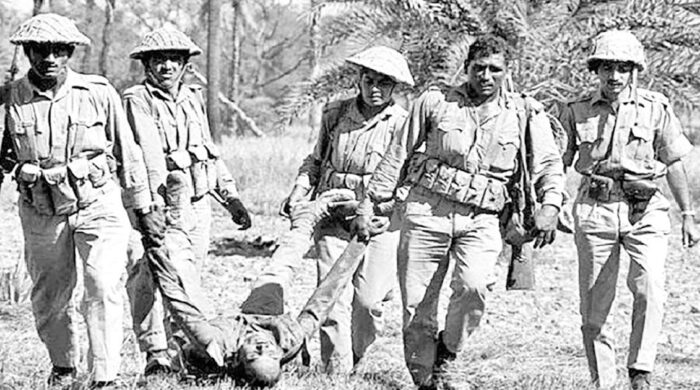


The issue of officially acknowledging the 1971 horrick killings in Bangladesh as “genocide” has once again drawn global attention. In this context, a proposal has been introduced in the U.S. Congress, bringing the issue back into the spotlight.
Democratic Congressman Greg Landsman introduced the proposal last Friday in the U.S. House of Representatives. The proposal calls for officially recognizing the 1971 crackdown by the Pakistani military as genocide under the definition of the United Nations.
It states that after “Operation Searchlight” began on March 25, the Pakistani army and its collaborators carried out widespread killings. While people of all religions were targeted, the Hindu community faced particularly systematic and planned extermination.
The proposal also emphasizes that Jamaat-e-Islami should be held accountable for its alleged collaboration in crimes against humanity in 1971, and it calls for ensuring the protection of religious minorities in Bangladesh.
Speaking during the presentation of the proposal, Greg Landsman said, “The 1971 operation by the Pakistani forces clearly falls within the definition of genocide. Recognition should have come a long time ago.”
Earlier, on February 9, a hearing was held at Capitol Hill discussing the human rights situation in Bangladesh and the 1971 genocide. The hearing was organized by a group called “Hindu Action.”
Dilip Nath, Democratic Party district leader in New York, said that the proposal was introduced in Congress as a follow-up to that discussion.
He further claimed that Jamaat-e-Islami has become active again in the context of recent political changes, and if the proposal is passed, the United States could once again take a strict stance against the organization for its role in the 1971 crimes.
Analysts believe that if the proposal is adopted, it could reignite diplomatic and political discussions about the 1971 genocide on the international stage.