



There is no denying that when the interim government assumed office, the country’s economy was in deep distress and it did start amid acute economic stress. Foreign exchange reserves were under severe pressure, revenue performance was weak and confidence in the banking sector had significantly eroded. In such conditions, borrowing to sustain basic state functions was largely unavoidable. The concern, however, is that this temporary necessity appears to be evolving into a governing strategy, with debt increasingly treated as an easiest solution.
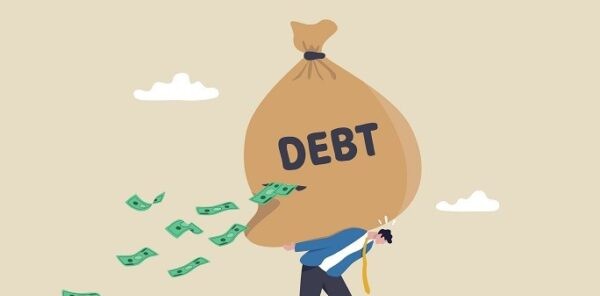
At the outset, the interim government promised fiscal austerity and restraint in borrowing. Yet, within just 18 months, the total amount of loans taken during its tenure has approached nearly BDT 4 trillion. In terms of time span, this exceeds the borrowing of any previous government. The critical question is whether this debt has put the economy on a path to recovery or whether it has merely bought time.
Soon after taking office, the interim government released a white paper exposing large-scale corruption and looting during the previous regime, particularly in public procurement and development projects. However, in practice, many of those very projects initiated under the previous government have been continued—often with increased costs. Extensions, re-evaluations, and revised budgets have added hundreds of billions of taka in additional expenditure. This raises an uncomfortable question: has the policy changed, or only the names of those in power?
Even more concerning is where the borrowed money is being spent. A significant portion of the loans has gone not into development but into recurrent expenditure. Salaries and allowances of government employees, pensions, subsidies, and interest payments on existing debt are consuming the bulk of the revenue. When recurrent expenditure exceeds development spending—and borrowing is required just to bridge that gap—it is not a sign of economic health but a warning of future trouble.
Dependence on foreign loans is also increasing. As Bangladesh moves toward graduation from LDC status, concessional financing is shrinking, and interest rates on external borrowing are rising. Senior policymakers—from the planning adviser to the NBR chairman—have openly warned that the country is falling into a debt trap. Yet these warnings have not translated into meaningful policy restraint. Foreign loans are not just about money; they come with conditions, reform requirements, and long-term constraints on policy autonomy—burdens that future governments will have to carry.
The most glaring weakness lies in revenue mobilization. Government expenditure is rising much faster than revenue collection. As a result, borrowing continues to grow while the capacity to repay remains limited. If this trend persists, the state will eventually face only two options: raising taxes or cutting subsidies. In both cases, the pressure will ultimately fall on ordinary citizens.
The interim government’s greatest advantage was its non-political character. This was precisely the moment to take tough and unpopular decisions—cut unnecessary spending, cancel non-essential projects, and push through deep revenue reforms. That opportunity has largely been missed. Instead, a heavy economic burden is being passed on to the next elected government.
Debt can help manage a crisis, but it cannot resolve one. The interim government may claim that it has restored a degree of stability, but in reality, its economic strategy appears more like an attempt to buy time with borrowed money. When that time runs out, the hard consequences will no longer be borne by the interim government alone—they will be borne by the entire nation.