



The market tends to respond sensitively not only during Ramadan but also at other times. Even minor shifts—an extra spell of heat, sudden rain, a short drought, or an unexpected cold snap—can unsettle the system. At times demand rises; at others, supply pressures emerge. Together, these factors create psychological volatility, heightening public anxiety over the prices of essential commodities.
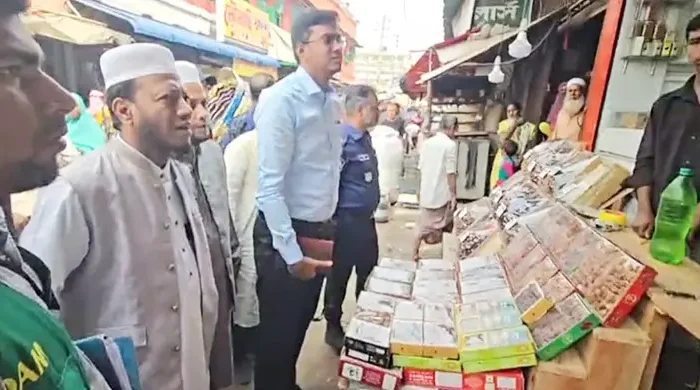
At present, the Muslim community is observing the holy month of fasting. Unfortunately, Ramadan has once again become a convenient pretext for some traders to increase prices. As usual, a spree of price hikes—both with and without justification—is underway. In this context, the decision of Kushtia-3 constituency Member of Parliament, Mufti Amir Hamza, to personally engage in market monitoring alongside the administration has naturally drawn public attention. Such an initiative has rarely been seen in this district in the past, and therefore the public is viewing it differently. Many are saying that steps taken in the public interest deserve appreciation.
In a democratic system, the primary responsibility of an elected representative is to safeguard public interest and ensure an accountable administrative environment. The marketplace is a sphere where the daily realities of countless people are determined. Therefore, coordinated involvement of political leadership and the administration in ensuring price control and transparency sends a positive message. On one hand, it instills a sense of responsibility among traders; on the other, it fosters confidence among consumers.
The significance of MP Amir Hamza’s initiative lies in its principled stance. When a Member of Parliament personally visits markets, speaks with buyers and sellers, and ensures the effectiveness of administrative measures, it is more than symbolic—it reflects tangible accountability. Such active engagement during a religiously significant time like Ramadan also demonstrates social sensitivity.
However, market supervision cannot remain confined to fines and drives alone. Sustainable results require long-term planning—strengthening supply chains, ensuring transparent information flow between wholesale and retail markets, and increasing awareness about fair pricing. An elected representative’s initiative reaches its full potential only when it is linked to policy-level and structural reforms. Maintaining continuity in this regard will be crucial.
Another important factor is neutrality. Market monitoring should not turn into political theatrics but rather become part of a regular, institutionalized process. Assisting lawful administrative action and ensuring its transparent implementation—while maintaining balance—is the true test of a responsible public representative. So far, the initiative appears to be a coordinated effort rather than a partisan display.
In Bangladesh, it is not uncommon to witness irregularities during times of crisis. Artificial shortages, unjustified price hikes, and allegations of hoarding are recurring phenomena. Prices are not supposed to rise merely because demand increases, especially when there is no significant supply shortage. Timely oversight can therefore help restore discipline in the market. At the same time, it must be acknowledged that traders are an integral part of the economy. A discussion-based, cooperative relationship with them offers the most sustainable path forward.
We would like to emphasize that the recurring explanation—“demand has increased”—is insufficient to justify price hikes during Ramadan. Market dynamics are not governed solely by supply and demand equations; they are also shaped by the mindset and ethical stance of traders. Ramadan teaches restraint, empathy, and solidarity. Pursuing excessive profits during this sacred time conflicts with both social and religious values—this message must be clearly articulated.
Traders are members of this society; many of them are Muslims who also observe fasting. Therefore, beyond administrative penalties, a moral appeal is necessary—encouraging alignment between commercial practices and the spirit of Ramadan. Earning profit is not a crime, but unreasonable profiteering erodes social trust and contradicts religious sensitivities. Awakening this awareness is the core challenge.
In this context, the MP’s initiative to monitor markets alongside the administration can be effective if it combines enforcement with efforts to cultivate ethical awareness. The application of rules and the practice of values must go hand in hand. Only then can the market during Ramadan truly reflect restraint and compassion.
Mufti Amir Hamza’s initiative should therefore not be seen as an isolated event but as a positive precedent. If this effort becomes regular and structured, it may have a lasting impact on local market management. It could also serve as a model for other elected representatives—demonstrating how to work in coordination with the administration and engage directly in matters of public interest.
In conclusion, active engagement in the public interest is always welcome. Yet such engagement must become institutionalized, consistent, and equally effective for all. In the context of Ramadan, this market monitoring initiative has reopened an important conversation. Time will tell how enduring and impactful it ultimately proves to be.