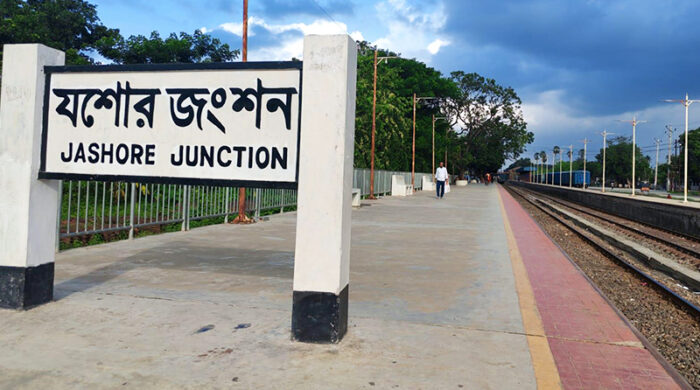


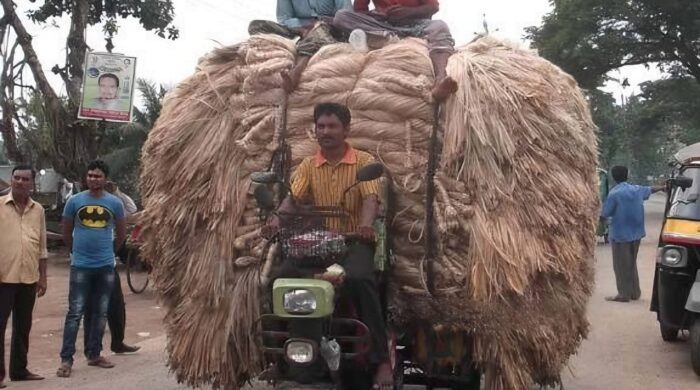


The jute market in country’s south western Bangladesh is enjoying a strong season, with good yields and satisfactory prices encouraging trade. Though the increased production costs have reduced profit margins, farmers say returns remain attractive due to the high output.According to the Department of Agricultural Extension (DAE) in Jashore Regional Office, jute has been cultivated on 150,195 hectares across ten districts in the southwest this year.
At the beginning of the marketing season, farmers received Tk 4,500–4,800 per maund for raw jute. As market arrivals increased, prices eased slightly to Tk 4,200–4,400 per maund. Even so, growers say the strong yield has enabled them to remain profitable.
DAE’s Jessore Regional Office reported that jute cultivation covered 25,125 hectares in Jashore , 20,227 hectares in Jhenaidah, 34,818 hectares in Magura, 40,315 hectares in Kushtia, 9,135 hectares in Chuadanga and 20,575 hectares in Meherpur during the current season.
Farmers said the season began with a shortage of rainfall, forcing many to sow jute seeds using irrigation, which increased production costs. However, adequate rainfall later ensured healthy crop growth. Water accumulated in rivers, canals and wetlands, making the retting process easier than in previous years. Harvesting began in mid-June, and newly harvested jute started arriving at markets toward the end of the month.
Major jute trading centres in the region include Shailkupa, Langalbandh, Hat Fazilpur, Nagirat, Hatgopalpur, Kotchandpur and Barobazar in Jhenaidah; Mohammadpur, Sreepur, Nakol and Shalikha in Magura; Chowgacha, Jhikargacha, Navaran and Keshabpur in Jessore; Kumarkhali, Khoksa, Mirpur, Daulatpur, Poradah and Panti in Kushtia; Gangni, Meherpur Sadar and Mujibnagar in Meherpur; and Jibannagar, Alamdanga and Chuadanga Sadar in Chuadanga. Trading volumes have been increasing steadily in these markets.
Mahbubur Rahman Lombu, a farmer from Sarutia village in Shailkupa upazila of Jhenaidah, said he cultivated jute on two bighas of land and harvested around 10 maunds per bigha. He sold his produce at Tk 4,300 per maund at the Shailkupa market.
Another farmer, Bacchu Molla from Bijulia village, said he cultivated jute on eight bighas and harvested 10–11 maunds per bigha, selling it at Tk 4,200–4,300 per maund.
Nasrullah Hossain, a farmer from Tegharia village in Meherpur, said the crop was good this year, although trading had not yet reached its peak. He expects better prices as market activity increases.
Niranjan Sikder, a jute trader at the Shailkupa market, said fresh jute arrivals are increasing every day. Traders purchase jute from local markets and supply it to small and medium-sized jute mills as well as exporters in Faridpur, Rajbari, Jessore, Bogura and other parts of the country.
He said jute cultivated along the fertile banks of the Gorai River is renowned for its long, silky and golden fibres. In the trade, it is widely recognised as “District of Jute”—a premium grade that consistently fetches higher prices because of its superior fibre quality, low defect rate and strong demand from both local mills and export-oriented buyers.
“Farmers who produce high-quality jute through proper crop management receive significantly better prices in the market,” he added.
Md Kamruzzaman, Deputy Director of the DAE in Jhenaidah, said both jute cultivation and production have been encouraging this year.
“Market prices remain satisfactory, and farmers are able to recover production costs while making a reasonable profit,” he said.
Alamgir Biswas, Additional Director of the DAE’s Jashore Region, said the department implemented a series of coordinated field-level initiatives to boost jute production. These included promoting quality seeds, encouraging timely sowing, providing technical guidance on balanced fertiliser use, weed and pest management, and conducting regular field visits by extension officials.
He added that farmers were advised to use irrigation where rainfall was insufficient at the beginning of the season. They also received training on improved harvesting, retting and fibre extraction techniques. According to him, these initiatives, combined with favourable weather conditions, contributed significantly to this year’s strong jute production.