

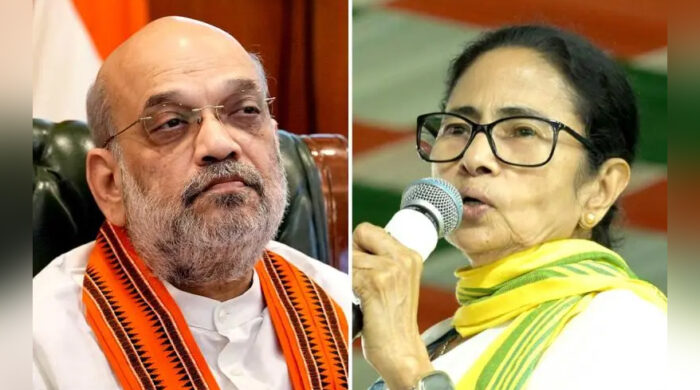


A fresh political controversy has been ignited surrounding recent remarks made by West Bengal’s former Chief Minister and Trinamool Congress leader Mamata Banerjee, who has been severely cornered by the BJP. Speaking at a public rally, she claimed that a person allegedly involved in a widely discussed murder case in Bangladesh had been arrested after entering Indian territory. She further asserted that she possesses “inside information” about the incident, including who allegedly orchestrated the killing. However, she did not present any names, evidence, or documentation to support these serious claims.
This raises a fundamental question: does such a statement from a senior political leader constitute responsible disclosure in the public interest, or is it a politically crafted message designed to create ambiguity, indirectly fueling confusion and possible provocation through suggestive language?
In democratic politics, the disclosure of information carries an essential and unavoidable responsibility. When statements involve sensitive issues such as international relations, murder investigations, or intelligence operations, this responsibility becomes even more critical. Without any evidence, documentation, or accountable explanation, claims like “I know everything” can easily mislead public perception. They also risk spreading unverified narratives and intensifying political tension, which is never conducive to a stable democratic environment.
In her remarks, Mamata Banerjee referred to India’s central investigative agencies and the Home Minister but did not mention any specific names. At the same time, she hinted at a murder case in Bangladesh that is already politically sensitive. Such vague and suggestive statements naturally generate curiosity, suspicion, and uncertainty among people in both countries.
Bangladesh–India relations are multi-layered, involving border management, trade, water-sharing, and regional security. The unresolved Teesta water-sharing issue, in particular, has long been considered a source of trust deficit between the two nations. In this context, ambiguous remarks by a senior political leader can further complicate an already sensitive relationship.
More importantly, while she claimed that she is withholding names “in the national interest,” she simultaneously suggested knowledge of details connected to an international murder case. This contradictory position raises a key question: if the information is sensitive enough to be withheld, what justifies partial disclosure in a public rally?
Ultimately, such statements are better understood as political messaging rather than verified facts. However, their timing and tone inevitably add to diplomatic sensitivity and public debate.